Keratoconus: what it is, warning signs and how it is treated
5 October 2026 · 5 min read
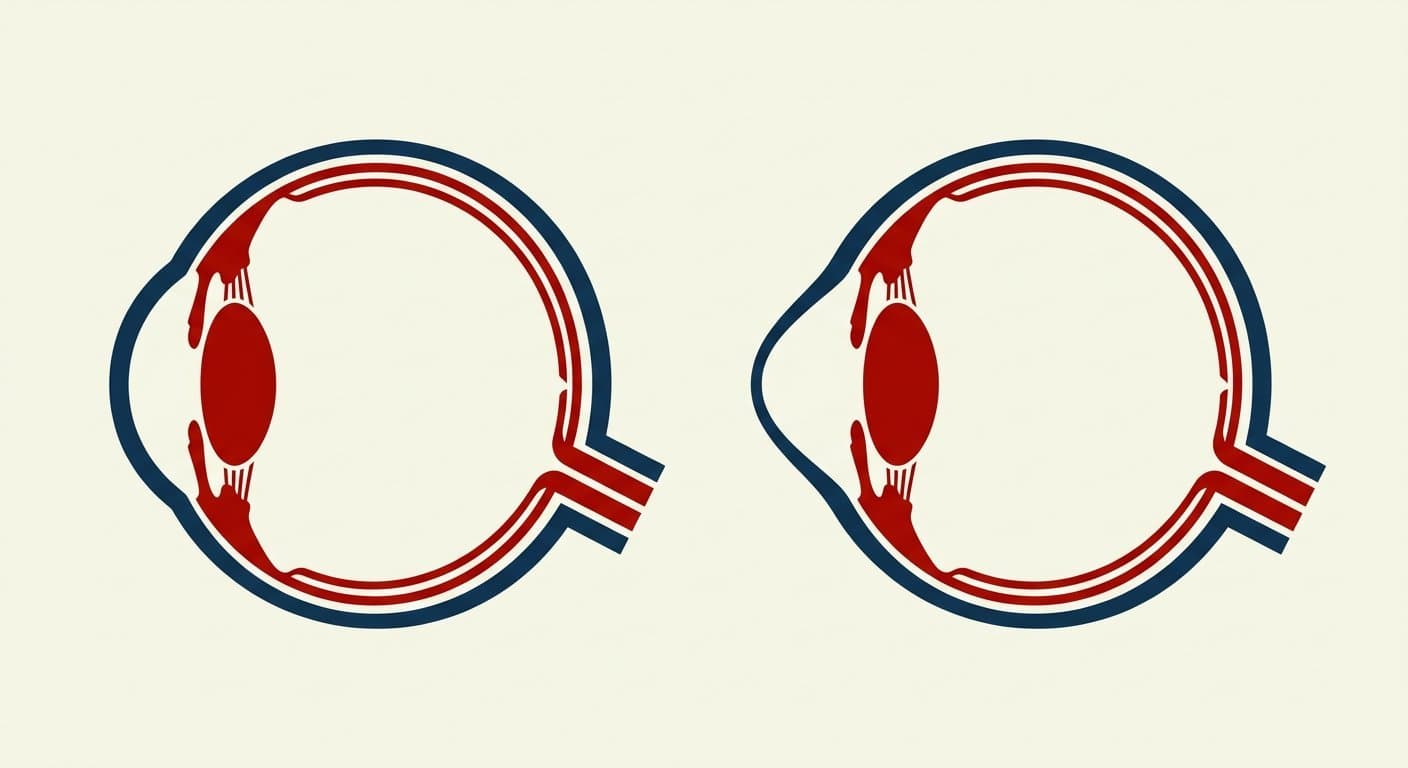
Keratoconus is an alteration of the cornea —the transparent front window of the eye— that thins and progressively deforms into a cone shape instead of a sphere. This deformation stops light from focusing properly: blurred, double vision or starbursts around lights.
It is usually detected in the teenage years or early twenties and, although it affects a minority of the population, it is being diagnosed earlier and earlier thanks to technology. Early detection is crucial: it completely changes the prognosis.
Signs that can point to keratoconus
- The prescription changes often: every year the astigmatism seems to increase.
- High irregular astigmatism that ordinary glasses can't fully correct.
- Double or ghost vision in one eye, especially at night.
- Strong light sensitivity and marked glare.
- Frequent, heavy eye rubbing (often linked to eye allergy).
- A past eye exam mentioned that the cornea looks irregular.
How is it diagnosed?
The reference test is corneal topography, a map of the cornea's surface carried out at eye clinics. At the optician's we can suspect it when we find irregular astigmatism, unstable prescriptions or vision that conventional lenses can't fully correct — and we refer you to the specialist to confirm it.
The great ally: special contact lenses
When glasses no longer provide enough visual quality, contact lenses create a new regular optical surface in front of the cornea. The change in visual quality is often spectacular:
- Gas-permeable rigid lenses: the classic option; small and very precise.
- Scleral lenses: they rest on the white of the eye and vault over the whole cornea; the star option for moderate and advanced cases thanks to their comfort.
- Hybrid lenses: rigid centre for sharpness and soft skirt for comfort.
- Piggyback systems: a soft base lens with the rigid one on top, for sensitive corneas.
And medically, what can be done?
The treatment that slows the condition down is corneal cross-linking, a technique that strengthens the internal bonds of the cornea, performed by the ophthalmologist when keratoconus is progressing. In very advanced cases there are surgical options (intrastromal rings or, rarely, corneal transplant). Our work is the optometric side: fitting the best possible lens and coordinating with the specialist.
Living with keratoconus
With a well-made fitting you can study, work, drive and play sport as normal. Regular reviews are essential: the cornea can keep changing and the lens must be adjusted to remain safe and comfortable.
At our practice we do special contact-lens fittings for keratoconus, with trials and follow-up. If you suspect it might be your case — or your child's — call us on +34 938 71 38 57 and we'll look into it carefully.