Childhood myopia: what it is and how to slow its progression
24 August 2026 · 6 min read

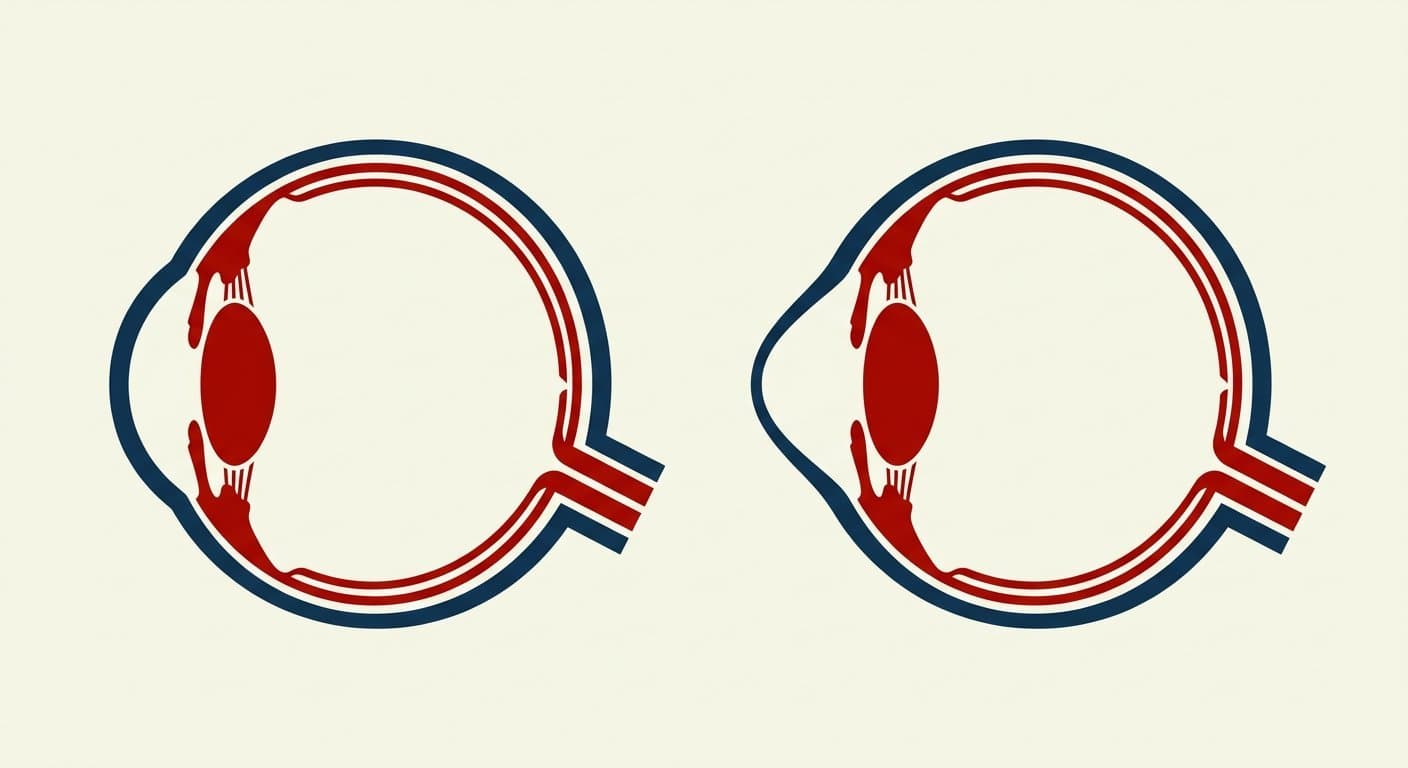
We are seeing more and more children with myopia, and at younger ages: studies suggest it is already detected in roughly 1 in 4 children aged 5 to 7 in Spain, and the World Health Organization forecasts that by 2050 half of the world's population will be myopic. And it's not just about wearing glasses: myopia that progresses a lot increases the risk of serious eye problems in adulthood.
The good news is that today we don't just prescribe glasses and look the other way: there are evidence-based myopia-control strategies that slow its progression. In this article we explain what to watch for at home and at school, what really works and the role we play at the optician's.
Why does childhood myopia appear and progress?
Myopia has a clear genetic component —if a parent is myopic, the risk increases— but today's lifestyle accelerates it: many hours of near vision (screens, books, homework) and few hours outdoors in natural light, which is precisely the great protective factor.
- Family history of myopia (especially if both parents have it).
- Many daily hours of screens and near activities without breaks.
- Little time outdoors: an average of 2 hours a day in natural light is recommended.
- Starting very early: the younger the child when it appears, the more time it has to progress.
Warning signs at home and at school
- Sits very close to the screen or books, or at the front row to see clearly.
- Squints or frowns when looking into the distance (the blackboard, the TV).
- Complains of headaches or tired eyes at the end of the day.
- School performance drops, or avoids activities requiring distance vision.
- Rubs their eyes frequently or closes one eye to focus.
- Mixes up similar letters or numbers when reading from afar.
Control strategies with real evidence behind them
The goal is not to get back to zero dioptres —for now, myopia cannot be erased— but to slow the growth of the eye while the child grows. These are the tools with the best data behind them:
- Myopia-control contact lenses: daily soft lenses with specific designs to slow progression; worn during the day with a schedule and follow-up.
- Spectacle lenses with peripheral microlenses (DIMS or HALT-type technologies): they look like ordinary glasses, but their design reduces the eye's growth stimulus.
- Overnight orthokeratology: rigid lenses worn while sleeping that temporarily reshape the cornea.
- Visual habits: the 20-20-20 rule, good lighting and a reading distance of at least 35-40 cm.
- Outdoor time every day: natural light is the best-documented protective factor — as important as the chosen lens.
What is our role at the optician's?
At the practice we carry out a full, personalised assessment: family history, habits, current prescription and eye health. With all of this we propose the most suitable solution for each child and schedule regular follow-up reviews to check that progression is slowing.
At Quatre 40 Òptics we work with children's myopia control using specialised contact lenses, and we coordinate with local professionals whenever a case needs additional medical assessment. No child is a number: every case is reviewed with time and without rushing.
And if my child already wears glasses, is it still worth it?
Yes: control is not about replacing glasses, but about stopping the prescription from climbing year after year. In fact, the best time to start is right after myopia is detected. And remember: none of this replaces an in-person eye test; every child needs a tailored plan.
Want us to take a look? Book an appointment at our optician's in Cardedeu (+34 938 71 38 57) and we'll assess your child's case with all the time in the world.