Night driving: why glare bothers you so much — and what you can do about it
19 October 2026 · 5 min read
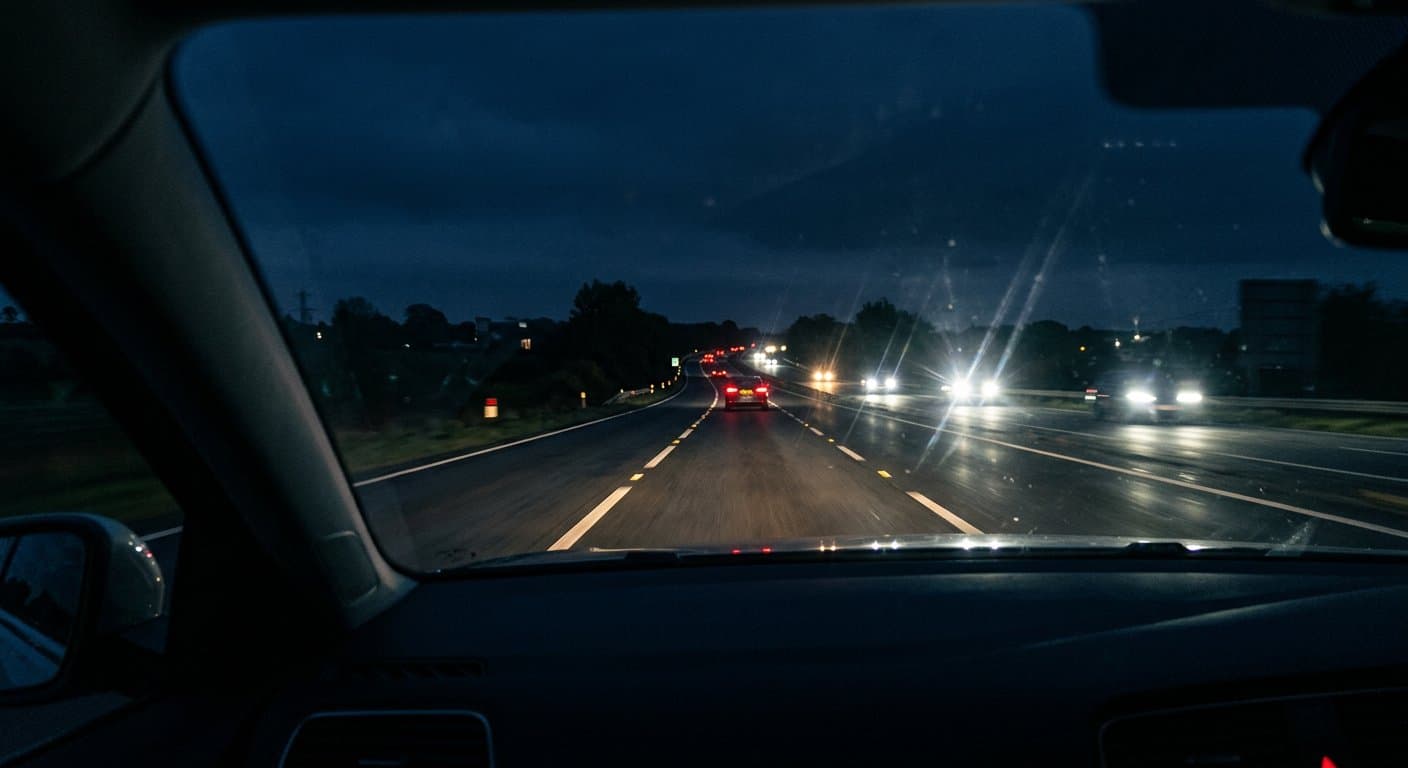
On the last Sunday of October the clocks change and, all of a sudden, the drive home happens at night. Many drivers notice during that first week that seeing at night is not like seeing in daylight: headlight pairs making streaks, trembling signs, intense halos.
At night, the pupil dilates and every small optical error on the eye's surface gets bigger. That's physiology, but there's often also a component that can be corrected.
Three causes, three different solutions
- Outdated prescription: the most common cause and the easiest to solve — a quarter dioptre badly compensated is three times more noticeable at night
- Dry eye: after 8 hours of screen time, your tear film arrives at the car broken and lights fall apart — artificial tears before you set off help a lot
- Natural brightness: be honest — a perfect lens doesn't remove other mirrors' glare, but it puts you in the best possible position
What actually works (and what's marketing)
A quality anti-reflective treatment makes a real difference: it reduces the internal lens reflections that streak around every light. If you wear old or scratched glasses, changing them often removes half the night-driving complaints.
The yellow 'night glasses' sold through ads have no safety evidence and reduce total light reaching the eye. For night driving, more light and better contrast is the way, not less light.
A quick checkpoint before winter
If this October you notice the night tires you three times more than summer, do yourself a favour: an express eye test before the darkness is total. At the practice we measure your real visual demand in daylight and twilight and we'll tell you honestly whether the issue is your prescription, your ocular surface or simply night being night.
Calling +34 938 71 38 57 or writing on WhatsApp gets your appointment done in two minutes. Driving at night rested is priceless — and risk-free.